Friday, 23 September 2016

A Tale of Two Riparian Zones

Flotilla at Amsterdam
'Riparian zone' is the green ribbon of life alongside a stream/river/waterbody. This ribbon is a mixture of vegetation types, which varies greatly from place to place. The riparian zone is critical to the health of every stream and its surroundings.

The images illustrate the riparian zones at Amsterdam and Ahmedabad. Needless to even judge, which city has given the due importance to conservation and maintenance of their respective riparian zones. Therefore, while Amsterdam can serve as a model for conservation and maintenance of riparian zones inside city limits, the Sabarmati riverfront at Ahmedabad certainly cannot be one such model. 
Riparian zone at Ahmedabad

No Environment Impact Assessment of the project was conducted nor was any credible public consultation process held, while planning the Sabarmati river front at Ahmedabad. The Sabarmati channel, for effecting this showpiece development, had to be uniformly narrowed to 275 metres during the riverfront development project from its natural width of about 350 metres. In this attempt of “pinching the river”, the original character of the river has changed completely from a seasonally flowing river to an impounded tank. 

The Sabarmati Riverfront Development Project has converted a 10.4 KM stretch of Sabarmati River within Ahmedabad city limits into an urban space by reclaiming nearly 200 ha of land and displacing nearly 10,000 people. Over 3,000 people have been moved to a marshland in the outskirts of the city with negligible compensation, little and infrequent access to drinking water and minimal sanitation facilities. Concrete embankment walls of height 4 to 6 meters have been created for this stretch of 10.4 KM on both banks with walkways. The mainstay of the project was the sale of riverfront property. 21 % of the reclaimed land which was developed by concretising the river bank has been sold to private developers for commercial purpose.

Even more sadly, the water that is impounded in this Sabarmati Riverfront stretch is not Sabarmati river water, but Narmada river Water. Water from Narmada canal is released in Sabarmati upstream of the riverfront project; water on which the city of Ahmedabad has no right. This water from Narmada was justified and originally meant for the drought prone areas of Kutch, Saurashtra and North Gujarat.Sadly, water meant for addressing drought were diverted for a cosmetic facelift of the Ahmedabad city. Thus the water we see in Sabarmati in Ahmedabad is water deprived from the drought prone areas.

The Sabarmati Riverfront Project has also not resulted in cleaning of the Sabarmati river. Instead the pollution from untreated sewage and industrial effluent gets diverted near the Vasna Barrage downstream of riverfront project stretch. Even after the riverfront development project, water quality of the Sabarmati river downstream of the Vasna Barrage is extremely poor. The 10.4 KM long stretch is like a canal, upstream of it is a dry river in most days and downstream is one of the most polluted stretch.


The All-Concrete Sabarmati River Front
The National Institute of Hydrology and the IIT Roorkee has re-evaluated the project design. Their report say that the original calculations did not take into account any simultaneous rainfall over the entire catchment area. The report also states that riverfront development is not a flood control scheme, and therefore the municipal corporation needs to work out other measures to meet the impending challenge of floods.

This is the famed Gujarat model of Urbanization!

Years back, while working on an urban rejuvenation plan for the former industrial township of Howrah, some of the famed international urban rejuvenation experts, with whom I had the great fortune of working with, had categorically advised against adopting a "Sabarmati Riverfront" style of development for the Hooghly.

Disclaimer / Caveat: Whatever I have stated is publicly available information and does not represent the view of the firm I work for.
(This post is not copyrighted and may be reproduced freely with appropriate attribution of source)

Saturday, 10 September 2016

When in Crisis..Call for Concessions

Tata Motors’ small car plant at Gujarat’s Sanand has an installed capacity to make up to 200,000 cars per year. The capacity however remains vastly underutilized with the Nano’s sales averaging a little over 1,000 units per month! In March,  2017 Tata Motors sold just 174 units of the Nano.


No wonder, after attempting and failing to stimulate demand for the Nano in a sluggish car market, Tata Motors is now looking at producing other automobiles at its factory in Sanand. In fact, recent reports in the media indicate that Tata Motors' management’s entire focus is now on new platforms such as Tiago and upcoming launches. There has been reports that the that the company is no longer investing in the Nano.

The company, reportedly in 2015 was already exploring options to to make amendments to the so-called state support agreement it signed with the Gujarat government in 2008 before starting production of the Nano in Sanand, where it moved after abandoning its plant in Singur. Under the agreement, Tata Motors could avail of tax benefits and soft loans from the Gujarat government exclusively for manufacturing the Nano.  Besides Nano, the Sanand factory now manufactures the hatchback Tiago. As per a PTI report production of Nano has been curtailed to 10 % of the Sanand unit's small car capacity.

Last year, on 22 February 2016, nearly 400 permanent workers of the company at the Sanand plant had called the flash strike, demanding re-instatement of 28 suspended workers, two of them were suspended in December, 2015 on charges of indiscipline. After an extensive consultation with Sanjay Prasad, Principal Secretary, Labour Department, Government of Gujarat along with Tata Motors officials and other labour department officials, the striking workers decided to call off nearly a month-long strike on the night of March 22, 2016.

CIRCA 2009

Credit rating and market research firm Crisil on January 29, 2009 had downgraded the ratings of both Tata Motors and Ashok Leyland's debt. As per Crisil's official release, while it attributed the downgrade in Ashok Leyland's rating to the company's business and financial risk because of the expectation of "continued weak demand for medium and heavy commercial vehicles, coupled with its ongoing debt funded capital expenditure"; in case of Tata Motors, the downgrade reflected the "significant impact of the weakening business environment on the company's global and Indian operations", and the resultant strain on its financial risk profile.

"Significant impact of the weakening business environment on the company's global and Indian operations"...Indeed!

For Tata Motors, the problem had got even harsher due to some of their high profile but expensive acquisitions in the overseas market. After the takeover of European steel major Corus by Tata Steel, Tata Motors had acquired the British auto firm Jaguar Land Rover (JLR) in June 2008, paying a hefty sum of $2.3 billion. Since then, their sales had fallen 22 %, production had been slashed by 60 %, 1800 jobs had been cut and Tata Motors have had to pump in $1.2 billion of working capital into JLR. As the condition did not improve, in March 2008 the company had then approached the British government for a loan guarantee of $730 million. Added to this, back home, the sales of the Tata Motor’s heavy vehicles had fallen by 60 % (may be to utilize the excess capacity, Nano was then being assembled in their Pantnagar plant). All these factors had put the company into a severe crisis and Standard & Poor’s had downgraded the credit rating of the company days after it launched the world’s cheapest car, the Nano. The downgrade, had put Tata Motors deeper into “junk debt” territory, highlighting the view that the Nano will contribute "little" to profits soon despite hopes it will one day revolutionize travel for millions of people.

It needs to be recalled in this context that in March 2006, Tata Motors had announced their intention of establishing an automobile plant at Singur in West Bengal and the company had planned to roll out a small and cheap car priced at around US $2000 by 2008, . According to the then Managing Director of Tata Motors, among other sites, they had chosen Singur for its location advantage - link to a metropolitan city like Kolkata, an international airport, major ports (Kolkata and Haldia), railway and the golden quadrilateral. The company had thus planned an ambitious project of rolling out ‘250,000 vehicles per year with flexibility to raise it to 350,000 per year; targeting both foreign and domestic markets. However, as indicated in the earlier paragraph, like all other steel and automobile companies across the world, Tata Motors and other Tata Group companies too had been affected adversely by the recession that the global economy had been passing through since 2007-08. Tata Motors management, therefore, definitely needed to buy some crucial time- till the economy showed some genuine signs of recovery, and one definite way that time could be bought could have been only if the small/mini car project got delayed, which would naturally delay the launch date of the Nano. Any delay in project implementation due to reasons ‘beyond their control’, would not only secure the much needed time but also justify a rise in the price of the car. Besides, taking advantage of this impasse, possibilities of getting better financial incentives from other states, which compete with each other following a ‘race to the bottom approach’ for attracting investment, could also be explored.

It was as if destiny seemed to be in favour of Tata Motors, and in keeping with destiny's favour, it was on July 18, 2006 that Ms.Mamata Banerjee, the chief of All India Trinamool Congress, had sown paddy near Singur to show her first mark of protest. Soon after on December 3, 2007 Ms.Banerjee had announced an indefinite hunger strike on the issue. However, after 25 days following personal appeals by the then President and Prime Minister of India Ms.Banerjee had called off her indefinite hunger strike on the Singur issue. However, subsequently on August 24, 2008 Ms.Banerjee had re-initiated the dharna (this time around an indefinite oneat Singur and remained steadfast on this cause. 

Finally on October 7, 2008 Tata Motors announced the shifting of the car plant from Singur to Sanand, Gujarat. The most crucial gain for Tata Motors was to get those seven crucial months between November 2008 (when the launch was initially scheduled) and March 2009 (when the Nano was actually launched). These additional seven months, in hindsight, appears to have had benefited the company in three ways:
  1. Firstly, the production cost could be reduced. Now, in March 2009 the cost of production could be much less compared to the beginning of 2008. Since January 2008, the prices of two major inputs namely cold rolled steel and rubber have decreased by 28 % and 19 % In addition to this, the Government of India too had slashed the excise duty from 16 % to 8 %. Moreover the price of crude oil too had decreased by over 51 % in the said period.
  2. Secondly, Tata Motors had an opportunity to mobilize funds, at a negligible cost, by asking the prospective buyers of Nano to place deposits in advance. This had been made possible at a time when the company has been facing severe financial crisis. It was estimated that prospective Nano customers, combined, were expected to place deposits worth up to $1 billion with Tata Motors at the time of placing order for the car. The company would retain that amount, without paying any interest, for at least three months before the first phase allocation of limited numbers of cars could be completed. And only those willing to be considered for the second batch would be paid interest, but below the market rate, and after one year. Had Tata Motors launched the Nano, as per their their original plan, in the month of November 2008 at a time when the economy was worst hit, the company is unlikely to have been successful in mobilizing such a huge sum of money and at such a negligible cost. By the July–August of 2008, Tata Motors management could realize that the impact of the prevailing global recession would be severe. It may be recalled that the crude price per barrel had risen up to $147 in July 2008. Certainly that (November 2008) could not have been the most opportune time to launch a motor car that was targeted at the price sensitive middle-class customers.
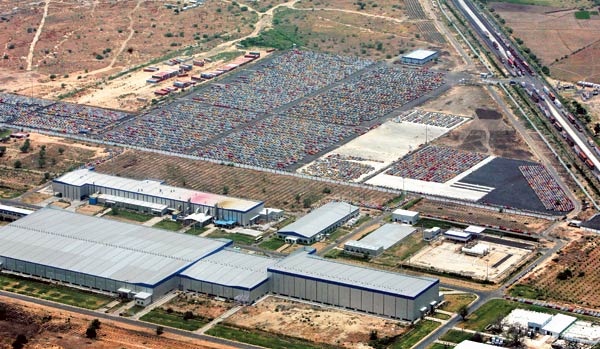
  3. Thirdly, the decision to abandon the Singur project had helped Tata Motors extract huge concessions from the State Government of Gujarat. It is widely speculated that the benefits the company had secured from the Gujarat Government were much higher than the prohibitively large concessions which Tata Motors had obtained from the Government of West Bengal. It may be noted that governments are often driven to offer concessions to multinational corporations since promoting such mega investments, typically served the political interests of host-state politicians. Attracting big ticket investments benefit specific constituencies, from whom politicians derived support.  Tata Motors could assess accurately the political interests and compulsions of the competing state governments in India. They simply utilized such weakness to their advantage. Even in 2006 they had successfully deployed the same strategy before selecting the Singur site. At that time, Tata Motors had projected Uttaranchal as another likely contender for the Nano project. The West Bengal Government out of desperation, had ended up offering huge economic concessions to the company, and in the process committing an act that the Honourable Supreme Court of India has now (in 2016) judged as illegal - land acquisition in Singur by the  former CPI(M)-led government in West Bengal towards the allotment of nearly 1,000 acres to Tata Motors in 2006 for the company's now aborted project to start a car plant in Singur.


Disclaimer / Caveat: Whatever I have stated is publicly available information and does not represent the view of the firm I work for.
(This post is not copyrighted and may be reproduced freely with appropriate attribution of source)

Friday, 2 September 2016

Flipkart's Fortunes

It has been widely reported that by 2020, India is expected to generate $100 billion online retail revenue out of which $35 billion will be through fashion e-commerce. Online apparel sales are set to grow four times in coming years. Key drivers in Indian e-commerce are:
  •   Large percentage of the country’s population subscribed to broadband Internet, burgeoning 3G internet users, and a recent introduction of 4G across the country.
  •   Rapid growth of smartphone users, soon to be world's second largest smartphone user base.
  •   Rising standards of living as result of fast decline in poverty rate.
  •   Availability of much wider product range on the online marketplaces compared to what is available at brick and mortar retailers.
  •   Competitive prices compared to brick and mortar retail driven by disintermediation and reduced inventory and real estate costs.
  •   Increased usage of online classified sites, with more consumer buying and selling second-hand goods
  •   Emergence of million-dollar startups like Flipkart, Snapdeal and others, and entry of multinational online marketplaces of the likes of Amazon.
Flipkart co-founders Binny Bansal (left) and Sachin Bansal

Growing Internet access, largely through smartphones, and the increasing emphasis on cashless transactions certainly make India a potentially lucrative market for e-commerce. The country’s sheer size and its population make it a potentially big market for e-commerce. Not surprisingly, Amazon, Flipkart[1] and Snapdeal[2] are battling it out for supremacy in this market, estimated to be worth $38 billion in 2016.

India should, sooner than later, is expected to allow foreign investment in supermarkets and also in e-commerce sites that are hybrid models allowing direct retail and serving as a marketplace Amazon follows this model in many countries, including the US.
The situation is further heightened by traditional brick and mortar retailers (both small and organised) who have taken both the legal and the lobbying route to prevent the march of the online marketplaces. While some of this opposition comes from small kirana stores, some definitely comes from Indian big retail that too would like some protection against the online marketplaces.

While this is the first of the challenge for the online marketplaces, the second is to build a brand and, through that, brand loyalty. Through 2014 and 2015, the marketplaces have been big advertisers on TV and in print, an evidence that the ability of the digital medium to build brands is still suspect. Despite that, none has managed to build brand loyalty. In part, the marketplaces themselves are to blame. They have used their capital, including venture capital, to fund discounts—to such an extent that many shoppers have been conditioned to expect significant discounts, sometimes in excess of 50%. To be sure, many have now gone slow on such sales, and will likely go slower, given the new government policy. The brand, and brand loyalty challenge remain. The third challenge is to get the supply chain and customer service right—certainly not an easy thing to do when millions of products are being sold to millions of customers across a few hundred cities and towns. Of the three marketplaces, only Amazon seems to have really focused on this, and the results are there for all to see.

Flipkart started off in September 2007 and has been the largest e-commerce firm in India since at least 2011, followed by Snapdeal. Until the June quarter of last year (2015), Amazon was a distant third.


Circa 2016

Flipkart reported gross sales of less than Rs.2,000 crore in July 2016, while Amazon’s gross sales crept up above Rs.2,000 crore.  Gross sales refer to the value of goods sold on a site, and not net revenue. Flipkart, Snapdeal and Amazon – all three are structured as online marketplaces in India because of regulations; their net revenue comprises the commissions they charge their third-party sellers on every transaction and fees for services. Flipkart seemed poised to lose its cherished status as India’s largest e-commerce firm to arch-rival and role model Amazon.com Inc.’s Indian unit after losing its lead in July 2016.

The American online retailer has remained intent solely on building popularity with customers through improving product selection, discounting, advertising and offering fast delivery. As of August 2016, Snapdeal offered more than 35 million products; Flipkart had more than 40 million products; while Amazon had more than 65 million. After learning from its mistakes in China, Amazon customized its offerings to suit the tastes and habits of Indian customers from the time of its launch. Amazon also found a way around the foreign direct investment (FDI) rules that ban online retail by setting up Cloudtail India Pvt. Ltd, its e-commerce retail joint venture with Infosys Ltd co-founder N.R. Narayana Murthy’s Catamaran Ventures. Cloudtail started operations in the middle of 2014 and soon became Amazon’s single-largest seller, contributing more than 40% of its business in some months. Amazon was able to control its customer experience via Cloudtail and its seller programmes such as Fulfilment by Amazon.


A Fashionable Acquisition

Fashion, which offers higher margins to online retailers compared with mobile phones and books, is expected to overtake consumer electronics as the largest category at 35% of total online spending by 2020. Online retail is expected to surge to $60 billion by then. For Flipkart, the acquisition of Jabong will extend its dominance in the fashion space and is seen as a move by the company to preserve its position as India’s No.1 e-commerce marketplace in the face of an onslaught by Amazon India. Flipkart, which also owns Myntra, the country’s largest specialty online fashion retailer, got a cut-price deal, paying just $70 million for Jabong, which was worth as much as $508 million in December 2013. Flipkart-Myntra is by far the largest online retailer of fashion in India, far ahead of Amazon India and Snapdeal. Myntra was acquired by Flipkart for $330 million in May 2014 in the biggest domestic consumer Internet deal at the time. The Jabong acquisition will widen that gap. Additionally, the acquisition of Jabong, which will be retained as a separate brand, will boost sales at Flipkart, which is struggling to revive sales growth and has been losing market share to Amazon.

Amazon India has been spending tens of millions of dollars on advertising and adding products in fashion. Snapdeal is seen to be the weakest of the lot in fashion and losing out on Jabong to Flipkart will come as a blow to the SoftBank and Alibaba-backed marketplace.
Both Flipkart and Snapdeal were aware that if Amazon India had a weakness, it was in the fashion segment. While Snapdeal (owned by Jasper Infotech Pvt. Ltd) was nervously weighing the consequences of acquiring Jabong with the company’s existing business structure, the regulatory issues and seeking answers to alleged corporate governance issues reported in the media, Flipkart took the deal as is.

Snapdeal’s legal team sent a long list of conditions; and were negotiating hard. They were worried about an investigation (into alleged irregularities at Jabong), if it happened post the acquisition. Snapdeal was also wavering between only the assets (just the technology and the brand name) of Jabong for cash or going ahead with a full share transaction. An asset purchase would have meant no liability on Snapdeal in case of a legal probe, if at all. These extensive negotiations were making Jabong’s investors nervous.
Flipkart, on the other hand, was swift. It was not afraid of buying Jabong’s shares for cash. The deal was actually put together in the last 48-72 hours. Flipkart was always interested in buying Jabong but the valuation that Jabong was seeking made it uncomfortable. The move to buy Jabong looks like a desperate attempt by Flipkart to maintain its market leadership position, albeit at a very attractive price of $70 million.

Global Fashion Group (GFG), Jabong’s holding company, had been looking for a buyer for Jabong for over a year. It had held discussions with several firms including Snapdeal, Future Group, Aditya Birla Group, Amazon and Flipkart. Jabong had started with an asking price of $1 billion in early 2015 when Amazon showed interest in its business. The deal fell through. By September 2015, the company was seeking a valuation of $500-$800 million and was talking to eBay, Paytm and a few others. Jabong, which matched larger rival Myntra in sales until early 2014, has ceded market share since then, as Myntra’s parent Flipkart has been spending hundreds of crores of rupees on advertisements and discounts to attract customers. Jabong’s value collapsed because of a combination of leadership issues, market share losses and a funding crunch.

“Jabong has built a strong brand that is synonymous with fashion, a loyal customer base and a unique selection with exclusive global brands. The acquisition of Jabong is a natural step in our journey to be India’s largest fashion platform. We see significant synergies between the two companies, especially on brand relationships and consumer experience,” said Ananth Narayanan, chief executive officer, Myntra (now part of Flipkart), who will now also run Jabong. “We will leverage each other’s capabilities and focus on healthy profitable growth,” said Narayanan. According to Narayanan, Jabong’s strength is in international brands and Myntra has strong private labels. “We can offer our private labels on Jabong,” he added. He also points at the target audience. While Jabong’s customer base is largely women, Myntra has a majority of male shoppers. “We want to together grow the market,” he added. Jabong offers more than 1,500 international high-street brands, sports labels, Indian ethnic and designer labels and over 150,000 styles from over a thousand sellers.


Reversal of Fortunes

Flipkart is in the middle of a storm of its own making: It is faced with a significant management churn at the top. For a company that pioneered e-commerce in the country, growth has virtually stalled since the middle of 2015, and the leadership team hasn’t been anle to figure out a way to kick-start sales. Its innovation engine isn’t firing. In e-commerce lingo, the gross sales  over a given period of time has not grown substantially. In the offline world, it is the equivalent of saying the sales or revenue numbers aren’t growing. And this, for the e-commerce pioneer that until now grew its gross sales by over 200% per annum for the past three years. Flipkart was the benchmark for a seamless buying experience until two years ago. Compared to Amazon, the search function is poor and the mobile site and app experiences are non-intuitive. The very culture that made Flipkart a runaway success in the first phase of its existence is now hindering its progress.

Sure, as things are, Flipkart is the market leader. But Amazon is sniping at its heels and Flipkart has no clue which way to go. No doubt, Flipkart is in the middle of a crisis of its own making, but it’s not too late to change its strategy. Millions of Indians are first-time buyers online. Flipkart needs to capture them earlier in their journey.


Innovation to boost sales?

India’s top e-commerce companies have introduced habit-changing offerings to customers in the past three months, but they are still struggling to find the products and services that will expand a nascent market that has worryingly declined since the start of the year.

Three months ago, Flipkart announced a “no-cost” equal monthly instalment (EMI) scheme, under which customers can buy higher-priced products such as premium smartphones, televisions, home appliances and other electronics via monthly instalments without paying interest. Flipkart also launched a Prime-like programme, Flipkart Assured, earlier this month.
In July 2016, online marketplace Amazon India  launched its well-known Prime membership programme in over 100 Indian cities, offering one-day and two-day delivery on lakhs of products for an initial fixed price of Rs.499. Subsequently, in an attempt to make product discovery easy for consumers, Amazon has now extended the Amazon’s Choice programme to India. Amazon Choice will recommend a specific product based on the needs of a shopper. This shall simplify product discovery for items on which buyers end up spending a lot of time researching. Snapdeal responded to its larger rivals Amazon and Flipkart that launched Amazon Prime[3] and Flipkart Assured[4] respectively as their premium services recently, by introducing its own loyalty service, Snapdeal Gold, towards the end of August 2016.

None of these services, however, addresses the core problem facing online retailers: the e-commerce market, in terms of the number of users, simply hasn’t grown so far this year. The last big innovations that expanded the market in a big way were the launches of high-quality, low-cost smartphones by Motorola and Xiaomi on Flipkart in 2014 and as well as its annual shopping event, Big Billion Day.


A long way to go? 

Back in 2007, when Flipkart was launched, e-commerce industry in India was taking its baby steps. Flipkart's founders Sachin Bansal and Binny Bansal, who were working for Amazon.com had an idea to start an e-commerce company in India. Both of them, who are alumni of IIT Delhi, left their jobs in Amazon to start their own business. In the first few years of its existence, Flipkart raised funds through venture capital funding. As the company grew in stature, more funding arrived. Flipkart repaid the investors’ faith with terrific performances year after year. In the financial year 2008-09, Flipkart had made sales to the tune of 40 million Indian rupees. This soon increased to 200 million Indian rupees the following year. The revenue figures of the online marketplaces should not be confused with the price of products sold (GMV[5] or gross sales); their revenues come from commissions these online marketplaces get from sellers or listing fees that they charge to list the products on their site. Their last round of fundraising had increased their value to $ 15 billion, however as of February 2016, their estimated value stood revised at $11 billion.

While in May 2015, the three leading e-commerce market places in India along with other smaller online e-commerce companies had clocked a combined GMV of $9 billion, that number had inched up to just about $10 billion at the end of May 2016, translating into an 11% annual growth. Flipkart has seen its GMV stall at about $4 billion for almost a year now, What's worth noting is that Flipkart had notched up a 400% growth the year before (FY 2015), when it's GMV zoomed from $1 billion to $4 billion, post which the numbers have remained flat.

Flipkart, to its credit, since its inception has grown rapidly in terms of gross merchandise value (GMV), but the company has been showing no signs of becoming profitable. As per data from the Registrar of Companies Flipkart did business of Rs.3,035.8 crore and reported a loss of Rs.719.5 crore for the year ended March 2014. In the previous fiscal FY13, the company had posted a revenue of Rs.1,195.9 crore and loss of Rs.344.6 crore; indicating the rise in its losses year on year. Interestingly, in an interview way back in July 2013 to Business Standard Flipkart’s promoters had said “Profitability is not a focus area. It’s a strategic decision. We can be profitable from today if we want. We can stop investing in one area and start making profits; it’s definitely possible. But we don’t want to remain as a small profitable company.”

The cash burn model of Flipkart has so far proved good to raise valuation in the impervious private equity markets but in public equity markets, the company will have to show real profits and give returns to investors to raise more funds. Companies who have given returns to investors in the equity markets had been built by the cash flows generated by the business and not by spending investor’s money.

Based on the numbers with the Registrar of Companies it is further understood that Flipkart earns around 10-12 % of the GMV as revenue. But it’s cost of handling these goods are around 15 %. The company will therefore need serious cost cutting just to turn profitable. However, since volumes are only ensured by huge discounts and high advertisement cost, cutting costs will not be easy.

As of now, Flipkart ships about eight million units a month. It has set itself an ambitious target:
  •          Ship one billion units a month by 2018
  •          Serve 100 million customers by 2018

Flipkart, it appears, clearly has a long way to go.


Disclaimer / Caveat: Whatever I have stated is publicly available information and does not represent the view of the firm I work for.

(This post is not copyrighted and may be reproduced freely with appropriate attribution of source)


[1] Flipkart is an e-commerce company founded in 2007 by Sachin Bansal and Binny Bansal. The company is registered in Singapore, but has its headquarters in Bangalore, Karnataka, India.
[2] Snapdeal is an online marketplace, based in New DelhiIndia. The company was started by Kunal Bahl, a Wharton graduate as part of the dual degree M&T Engineering and Business program at Penn, and Rohit Bansal, an alumnus of IIT Delhi in February 2010. 
[3] Amazon Prime is a paid service ($99 per year, plus a free 30-day trial or $10.99 per month) that gives Amazon shoppers a few distinct advantages. Members of Amazon Prime are eligible for free one- or two-day shipping on most items, among several other perks. It is a membership program that gives customers access to streaming video, music, e-books, free shipping and a variety of other Amazon-specific services and deals.
[4] Triggered by the launch of Amazon Prime in India, Flipkart has launched a revised version of its earlier loyalty program, by introducing Flipkart Assured. Under Flipkart Assured, customers get free delivery within 2-4 days on Flipkart Assured products above Rs 500. The products also go through stricter quality checks and a delivery assurance in any case of any mishaps or defects in the order.
[5] GMV is overall sales on an online marketplace, excluding discounts and returns which are an integral part of the e-commerce market.

Wednesday, 31 August 2016

When the Baba turned a Business Baron

It's high noon. The summer heat is unyielding and unkind; the unpleasantness further compounded by the lack of air-conditioners and the tardy movement of the two ceiling fans. Yet, the small hall with a seating capacity of around 50 is choc a bloc with television cameras; couple of yoga mats lie on the floor, and around 10 journalists are on alert, waiting for their subject to make an  appearance.

The place is Patanjali Yogpeeth in Haridwar in Uttarakhand, one of the largest yoga institutes in India. It's also the prize project of Ramdev, whose name is inevitably prefixed with baba, the honorific term assumed by the ascetics in the country.

Baba Ramdev enters the hall with 20-odd followers. Clad in a saffron cloth and wooden slippers, the Baba takes his position in the centre with the followers sitting behind him in a V-shaped pattern. Seated cross-legged, Ramdev's hands rest firmly on his knees, palms facing upwards.... it's time for Anulom Vilom Pranayama, a breathing exercise. Ramdev blocks his right nostril with his thumb and draws in air from the left nostril. The disciples follow suit. After a few seconds he releases the thumb and closes the left nostril with his ring finger. He then breathes out slowly through the right nostril.

The yoga session lasts for an hour, after which the cameramen pack up, the outdoor broadcasting vans make their exit from the sprawling campus and, the yoga guru quickly dons a new avatar: Baron Ramdev.

There haven’t been that many new, successful entrants in the FMCG world in the recent past at the national level. Barriers to entry are the high cost of awareness required for a national brand (read celebrity endorsements and mainstream TV advertising), managing a sophisticated network and uniform quality control. Ultimately, what works for Patanjali is the fact that the promoter of the brand, Baba Ramdev, is also its brand ambassador, and stands for good health and spirituality.  A big cost saver for the brand is that they don’t need to spend on advertising because of the high brand recall of Baba Ramdev whose popular TV show and public appearances have gained him mass media awareness at a very low cost. In addition, the Company reaps the benefits of a celebrity brand ambassador like Baba Ramdev for free (how he benefits from the brand is not clear, as he is not listed as an owner).

Commenting on the marketing of Patanjali’s personal care products, Ramdev had once said: “We don’t need our mothers and sisters to get half naked to sell our products, like the MNCs do. We don’t have the ideological crisis. We don’t indulge in glamour, obscenity or paid endorsements. I am the fee-less brand ambassador of Patanjali products.”

Baba Ramdev, who is driven around in a white Range Rover Evoque, initially found fame as a yoga evangelist, teaching the benefits of the Indian physical and spiritual discipline through television channel Aastha since 2000. “Business is a by-product,” he once said in an interview. “The Patanjali brand, prosperity and profit—everything is a by-product.” The Baba downplays his own role in building Patanjali into an emerging consumer product giant, saying his only role is that of a brand ambassador who works for free in television commercials representing the brands his company makes. Patanjali, which sells everything from shampoo and toothpaste to biscuits and noodles, and rice and wheat to honey and ghee, more than doubled its sales in the year ended 31 March 2016, from Rs.2,006 crore in the previous year (FY 2015). During the same period, sales of Hindustan Unilever Ltd (HUL), the local unit of Anglo-Dutch consumer products giant Unilever Plc. rose 4%.

A company with a similar product range and positioning of that of Patanjali is the Himalaya Drug Company which is also in the Rs.1500 crore turnover range and targets around 12% growth vis-a-vis Patanjali’s stated 20% target. Himalaya is a much older company than Patanjali, founded in 1937, though it started thinking of itself as an FMCG player only as late as 2009. It has also expanded beyond pharma to wellness and personal care , has its own stores, sells online – a very similar journey in fact. In that context, Patanjali’s growth is indeed commendable. Biotique is a beauty brand also based on the Ayurveda platform but has not expanded its product range.

Patanjali Ayurved Limited was founded as a small pharmacy in Haridwar in 1997 by P.P. Swami Ramdev Ji Maharaj.  Acharya Balkrishna is the Chairman of Patanjali Ayurved Limited and Mr. Rambharat is the Sr. Vice President of Patanjali Ayurved Limited. Patanjali Ayurved, makes nearly 800 products, from face creams to noodles. Priced considerably lower than offerings from multinational firms, Patanjali has started eating into the well-entrenched rivals’ market shares.

While it owns more than 15,000 exclusive outlets that sell healthy and organic consumer products and is into many product categories of personal care and food; hardly any market player took notice, when the company first introduced the products, leave alone imagining it as a potential business threat.

For the last decade, Baba Ramdev did not focus on proclaiming that his brand was the best. Instead, he told the Indians about the evils of MNCs, the virtues of products made in India, the corruption of corporates, the exploitation of farmers, the cancerous effects of fertilisers and chemicals and just about everything that surrounded his products. He just showed the nation the reasons and left the people on their own to explore his products. This was an absolutely brilliant ploy. Here no-one was pushing anything, only an environment was created where the Indian consumer wanted to see if the alternative to above evils was usable. The consumer might have been influenced by the fear of diseases or she might just have been patriotic enough to shun all evil multi-national firms. Whatever the reason, the Indian consumer already had a positive environment to try the Patanjali products.

The reasons for Patanjali’s accelerated growth in a 4P framework are:

  •  Product: Differentiated product that appeals to the Indian belief in Ayurveda/natural remedies/‘hand’ medicine
  •   Price: Discounted at 20 – 30% compared to competition. Low cost pack sizes – health juice sachets start at Rs 5, making their product accessible to many
  •   Place: Distribution through Ayurvedic pharmacies which further strengthens their health proposition. They have a franchisee based distribution strategy. The recently announced tie-up with Future Group tie-up will definitely further enlarge Patanjali’s retail footprint and make it easily available to shoppers. Tie-ups with online retailers such as bigbasket.com not only give them access to a growing middle class base but also reduce their cost of distribution and display.
  •   Positioning: Strong positioning on Ayurveda and health consistently reinforced by its ‘brand ambassador'.

One analyst, who has visited Patanjali factories multiple times, says Patanjali products are essentially herbal clones. “The process is simple. Top-selling products across brands are picked up from the market and then similar products are developed based on herbal formulations under Patanjali brands. Mostly, they are replicas of successful products of multinational companies,” the analyst said.  Products of Patanjali include -

  • Nutrition and Supplements
  • Grocery
  • Medicine
  • Home Care
  • Personal Care
  • Books and Media
  • Health Care


The Yoga evangelist turned business baron has just set the bar higher for his consumer products business — to Rs.1 trillion (Rs.100,000 crores) in net sales, a target he thinks can be reached in 10 years, if not five. The target is a near 20-fold increase from the Rs.5,000 crore in net sales that Patanjali posted in the business year that ended on 31 March 2016. The breadth of Ramdev’s ambition can be gauged from the fact that HUL, which has been around in India since 1888, hasn’t even touched one-third of Ramdev’s target. In the year to 31 March 2016, HUL posted net sales of Rs.32,482.72 crore. The target also represents nearly a third of the size of India’s entire packaged consumer products market at present, estimated at about Rs.3.2 trillion (Rs.320,000 crores) a year and projected to grow 12-15% annually over the next five years, reaching Rs.6.1 trillion (Rs.610,000 crores) in 2019.

Moreover, the company which manufactures and markets everything from flour, ghee, biscuits, noodles, spices to honey and toothpaste aims to continue growing at 100-125% annually for the next three years. Some of this growth could also come from international expansion, an option that it may explore if the domestic market gets saturated.
In April 2016, Mumbai-based Pittie Group, the nationwide distributor for Patanjali products, sewed up a distribution arrangement with Apollo Pharmacy. It also has a marketing arrangement with Kishore Biyani’s Future Retail Ltd for selling Patanjali products in 243 cities across India. Patanjali Ayurved has also teamed up with billionaire Mukesh Ambani’s retail chain Reliance Retail to sell its products. Over the next year, Patanjali will increase its retail presence through 4,000 distributors, more than 10,000 company-owned outlets, 100 Patanjali-branded stores and supermarkets, the company said in a statement recently.

“The company’s business model is rewriting the rules of consumer marketing in India. We think rapid growth will continue, driven by an ever-increasing consumer demand for its products; the launch of new categories; and a broader retail and distribution network,” Amit Sachdeva, an analyst with HSBC Securities and Capital Markets (India) Pvt. Ltd, wrote in a report about Patanjali dated 5 February 2016.

Contrary to the Baba’s claims, Patanjali does outsource manufacturing of some products like other packaged consumer products companies do. For instance, biscuits are made by Delhi-based Sona Biscuits and juices by a bunch of companies, including GK Dairy and Milk Products Pvt. Ltd . Haridwar-based Aakash Yog Health Products Ltd manufactures noodles for Patanjali. Aakash used to make noodles for HUL’s Knorr brand, till recently.

Over the next few years, Patanjali will focus on six areas: natural medicine, natural cosmetics, natural dairy products and food, natural cattle feed and feed supplements, bio-fertilizers and bio-pesticides, and natural indigenous seeds, said Ramdev. Patanjali is already a Rs.2,000 crore brand, but Baba Ramdev is not finished with it yet. The yoga guru who created the popular Ayurvedic products brand wants to expand capacity and push back multinationals as he fights for what he calls ‘economic independence’. There are plans to add five food parks—one in Madhya Pradesh and another one in Maharashtra have been decided upon. These are of huge capacity. More are underway. Patanjali has plans to open food parks in four or five locations, where investments will be very, very big. The plants will help with value addition of food—the idea is to do away with the middlemen involved in procurement of agriculture produce from the farmers directly. Along with this, it will help the company to increase the supply of raw material for herbal, cosmetic, natural products. The company plans to grow herbs locally.

Ramdev, who first shot to fame as the Aastha TV channel’s tele-healer in the early 2000s, has over the past decade or so expanded his interests to include politics, society, agriculture and moral policing, besides the buisness of fast moving consumer products and wellness. After Patanjali's success, other spiritual and yoga gurus have entered the market with branded products. In Baba Ramdev's words, "We want everyone to win, we don’t want to take over Indian companies—they are not my competition, we all must work together. And whoever is working should work carefully. I don’t consider them competitors—they are most welcome, but they should keep a few things in mind. First, manufacturing unit should be owned by them. Second, whoever wants to enter the category, should have studied about Ayurveda—it helps build trust. Third, these (products) are all an outcome of years of scientific research—they should focus on that."

To prevent getting beaten by an upstart, multinationals are quite likely to include more herbal and natural offerings in their own product portfolios. Colgate, for example, has introduced a new “Made in India” variant of toothpaste with neem tree extracts. India’s largest packaged consumer goods giant HUL in 2015 relaunched Lever Ayush, its ayurvedic range, to be sold exclusively online. HUL also acquired ayurvedic hair oil and shampoo brand Indulekha in December 2015, forking out $48 million, to strengthen its presence in the premium category. Suddenly, companies that sell personal care products made of ayurvedic, herbal or natural ingredients, are in expansion mode and seeking a bigger share of the market.

It is also not clear if Patanjali will be able to profitably scale up its foods operation, or if it will remain largely a niche personal care business. But as global corporates try to fight the yoga guru on his own turf, they also face challenges. For one, their costs will inevitably rise as they’re forced to launch or acquire new brands and advertise them to the hilt. Patanjali, by contrast, has just one brand—and one brand ambassador—to look after. That’s reasonably risky, but so long as Baba Ramdev appears on TV looking healthy and fit, the company won’t need movie stars or cricket players to endorse its products. More importantly, multinationals’ natural instinct has been to wow emerging-market customers by flaunting the clinical research that’s gone into their chemicals, lotions and pastes. An attempt to switch track and go herbal may ultimately be rejected as inauthentic.

While Patanjali has seen unparalleled success in recent times, some of its apparent strengths could turn out to be its limitations. For instance, most of its products are branded under “Patanjali” umbrella and are then linked with generic names such as Patanjali Atta Noodles, Patanjali ghee, Patanjali Cornflakes. Their communication largely focuses around the name “Patanjali” and not around any sub-brand. This could affect sales of their key categories, if inconsistent product categories do not perform well. It can also confuse consumers if Patanjali want to increase “product depth” and launch variants with minute differences. Furthermore, “Patanjali” is largely co-branded/co-promoted with Baba Ramdev and his companion Acharya Balkrishna. Any questions arising on their integrity is likely to affect the brand’s performance.

Baron...errr Baba Ramdev is perceived to be close to India’s ruling coalition, and has appeared with Prime Minister Narendra Modi on several public platforms. But the yoga guru disclaims any interest in politics. “I want to stay the way I am—sanyas, rashtradharma... (renunciation and duty to the nation) I want to do everything without any greed. Directly, I’ll never participate at any political position,” concludes Ramdev. In a recent interview, the Baba spoke about his future plans, "I’m not a brand. The brand is not my ultimate goal, the brand is my by-product. But, yes we have plans to open a university in every state, where students can train in Vedic and modern studies."


Disclaimer / Caveat: Whatever I have stated is publicly available information and does not represent the view of the firm I work for.

(This post is not copyrighted and may be reproduced freely with appropriate attribution of source)